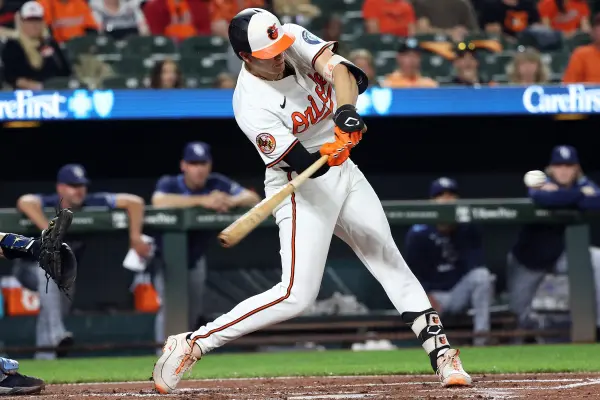
AL East: On the outside looking in
Jan 13 2026
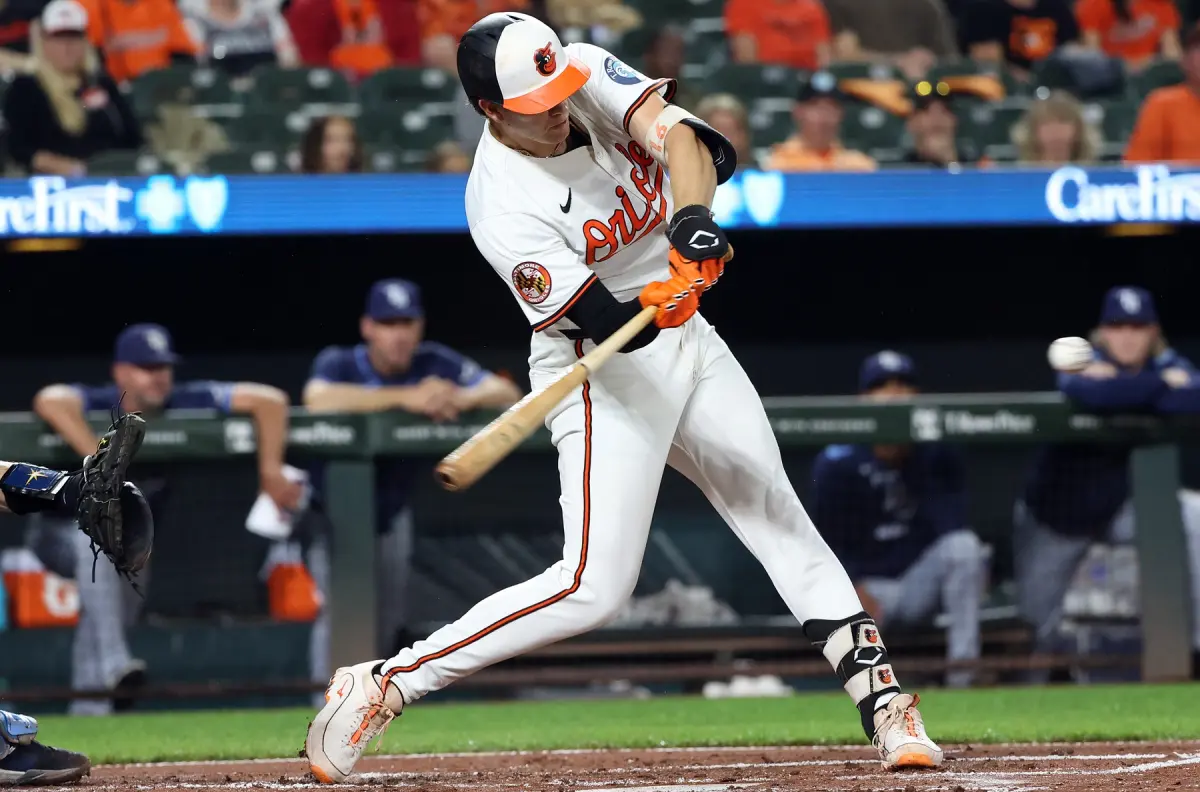
Between Baltimore’s blockbuster signing of Pete Alonso and the expectation that Samuel Basallo will fill a regular role to open the season in Baltimore (meaning the bulk of designated hitter at-bats will be split between Basallo and Adley Rutschman), both Ryan Mountcastle and Coby Mayo find themselves on the outside looking in of Baltimore’s lineup picture.
Mountcastle is coming off a down season (.250/.286/.367 in 357 PA) in which he missed considerable time due to a hamstring strain, but previously had a track record of being an above-average major league hitter for several years. Mayo, meanwhile, had an up-and-down rookie season but flashed in September (.301/.393/.548, 5 HR in 84 PA).
Despite Mountcastle’s lack of a clear lineup spot, Baltimore opted to sign him to a new contract in arbitration rather than non-tendering him. Mountcastle’s contract (1-year, $6.878 million in 2026 with a team option for $7.5 million in 2027) also has the potential to buy out a year of free agency with a team option. Still, despite his new contract, a trade remains a distinct possibility, and the terms of his contract are feasible for facilitating a deal.
Mayo also could be a trade candidate, but thus far, the team has pushed back on the idea. When asked about Mayo’s role following Alonso’s signing, President of Baseball Operations Mike Elias noted the possibility of Mayo playing other positions, stating, “There is still a lot of playing time available for him on a team that has Pete Alonso now. We have first base reps, we have designated hitter reps, as you mentioned, and the exploration of other positions — whether it’s third or something in the corner outfield — has been something we’ve always talked about with him. So the path remains open for him.”
While expanding his defensive repertoire would not provide a clear path to regular at-bats for Mayo, it could still provide him opportunities to mix in frequently or be the next man up in case of an injury. Third base would be the easiest transition for Mayo, since he has already seen considerable time there throughout his minor league career, and Mayo could be the next man up behind oft-injured Jordan Westburg. If Mayo takes well to corner outfield reps in the spring, he could also have another path to at-bats. Jeremiah Jackson and also oft-injured Tyler O'Neill are considered the favorites to get weak-side platoon at-bats in right field when Dylan Beavers sits, but Mayo could have an opportunity to compete for that role as well.
Boston finds itself in a similar situation to Baltimore regarding an incumbent first baseman, as Triston Casas has been seemingly squeezed from the team’s lineup picture following the trade acquisition of Willson Contreras.
Casas, who missed most of 2025 after tearing his right patellar tendon, is presently in the late stages of rehab and considered to be hopeful for Opening Day. While Casas has flashed high-end power at times, he has had trouble staying on the field, totaling just 351 PA between 2024 and 2025.
Among the range of outcomes for Casas is to open the year re-acclimating in AAA, as Casas still has minor league options remaining. If Boston wants to prioritize getting Casas consistent playing time, particularly coming off a lengthy injury absence, a stay in the minors to open the year could provide a clear path to get his feet back under him.
Another possibility for Casas is opening the year in the major league roster in a part-time role. While Contreras is expected to get most at-bats at first base, the team could still rotate him in at designated hitter from time to time, which would open up some first base at-bats for Casas.
As was the case last July, trade rumors surrounding Boston’s outfield have also remained persistent, with Jarren Duran specifically being the subject of trade whispers throughout the offseason. A potential Duran deal would, in all likelihood, be made to upgrade either the infield or starting rotation and would open up at-bats at designated hitter, as the team is presently expected to use either Duran, Roman Anthony, or Wilyer Abreu at designated hitter most days as currently constructed.
Still, even if Duran is dealt, Casas would not be a shoo-in to slot in at designated hitter given the presence of Masataka Yoshida on Boston’s roster. Both Yoshida and Casas have also been mentioned as potential trade candidates, though, so several variables are still up in the air.
While Boston prefers to keep Ceddanne Rafaela in the outfield, a change of course, depending on how the rest of the offseason unfolds, could also open up designated hitter at-bats. Since Boston was unable to retain Alex Bregman, its focus will reportedly now shift to Bo Bichette. If the team is unable to fill its infield void with Bichette or another outside acquisition, Rafaela could once again be an option to move to second base.
Anthony Volpe’s attempt to rebound from a disappointing 2025 season will be delayed, as the Yankees’ starting shortstop underwent surgery in mid-October to repair a partially torn labrum, which Volpe reportedly played through for most of the season. Despite Volpe’s struggles, though, the team has echoed sentiments throughout the offseason that they still view him as their starting shortstop when he returns from injury.
In Volpe’s absence, José Caballero is expected to get the first crack at the starting shortstop job. Caballero, who led MLB with 49 SB last season despite 370 PA, should be a mainstay in fantasy lineups for as long as he garners regular playing time, given his speed.
Additionally, Caballero’s strong finish to the season and uptick in on-base skills earned him a lofty upside projection (.375 OBP, 60-70 SB) in the 2026 Baseball Forecaster. A strong start to the season could force New York to keep Caballero in the lineup most days in a super-utility role even when Volpe returns, which would improve his chances at reaching this projection.
Beyond Caballero, none of New York’s other internal shortstop replacement options stand out as potential difference-makers.
Oswaldo Cabrera, who missed most of 2025 after a mid-May ankle fracture, is currently anticipated to open the year in a super-utility role. While Cabrera’s versatility helps give him some runs at playing time, his offensive performance before the ankle fracture (.243/.322/.308 in 122 PA) shows little reason for optimism.
New York has also added some depth options with major league experience, signing both Paul DeJong and Zack Short to minor league deals this offseason. DeJong has flashed power at times throughout his career, including his recent HR total of 24 in a resurgent 2024 season. However, DeJong’s performance bottomed out in 2025, and, at 32 years old, he may be on his last legs as a potential major league option. Short, meanwhile, has seen some time in the majors in recent years while bouncing between multiple organizations, but has struggled (.172/.271/.296 in 594 career MLB PA) when given opportunities.
With Tampa Bay’s December trade of Brandon Lowe, the team lost a longtime lineup stalwart and was left with a gaping hole at second base. While Tampa Bay could still make an outside acquisition at second base, time is dwindling on such a move, and Ketel Marte, who was linked with Tampa Bay in trade rumors for much of the offseason, is now believed to be off the trade market.
If Tampa Bay foregoes an outside acquisition for second base, the team will be left with several internal options.
Currently, Richie Palacios appears to be the frontrunner to open the season at second base. Palacios has split time between the infield and outfield throughout his major league career; however, given Tampa Bay’s abundance of left-handed-hitting outfielders, he now appears more likely to play in the infield. Finger and knee injuries sidelined Palacios for much of the 2025 season, but a solid finish to the year (.289/.364/.395 in 44 PA after being activated from the IL at the beginning of September) helped build momentum towards a role in 2026.
Tampa Bay’s shortstop competition could also have some bearing on the playing time picture at second base. It is currently anticipated that Taylor Walls and Carson Williams will both enter camp with a chance to win the starting role at shortstop. If Williams, the 2nd-ranked prospect in our Rays 2026 Org Report, can win the job, it would likely push Walls to either a bench role or a competition for at-bats at second base. Whether Walls sees time at second base in such a scenario would likely depend on the team’s willingness to sacrifice offense for premium defense.
Ryan Vilade, who was acquired by Tampa Bay from Cincinnati in exchange for cash considerations in November, could also be a consideration for at-bats at second base. Tampa Bay thought enough of Vilade to give him a 40-man roster spot, and, since he has no remaining minor league options, Vilade will have to be on the active roster unless he is designated for assignment. Vilade has struggled in limited major league opportunities but hit well in AAA last year (135 wRC+ in 461 PA) while cutting down on whiffs that have historically plagued him (8.3 SwStr%, down from 11.8% in 2024 in AAA). At the very least, Vilade looks to have a chance to win a role as a weak-side platoon partner for either Palacios at second base or one of Tampa Bay’s several left-handed outfielders; there could be an opening for a more expanded role, though, if he hits the ground running.
Toronto added to its rotation in the early stages of free agency, signing Dylan Cease and Cody Ponce, who appear to be slated to fill the rotation spots left by current free agents Chris Bassitt and Max Scherzer.
Given this expectation, José Berríos is considered the odd man out of Toronto’s rotation, and his time with the organization may be nearing an end. However, Berrios’ remaining contract (3 years, $67 million) is a significant obstacle to a trade. While Toronto likely prefers to trade Berrios, a temporary move to the bullpen or an outright release could also be possible.
Eric Lauer, who saw considerable time in Toronto’s rotation throughout 2025, is presently expected to begin the year in a swingman role and would be the likely next man up in the rotation, particularly if Toronto cuts ties with Berrios. Lauer pitched to solid surface stats (104 IP, 3.18 ERA, 1.11 WHIP) last season; however, his lack of whiffs, flyball tilt, and career numbers all question the repeatability of this performance, as do Toronto’s offseason actions, which have pushed him back to the bullpen.
Toronto’s rotation depth also includes Ricky Tiedemann, the 4th-ranked prospect in Toronto’s 2026 Org Report. Tiedemann is expected to be fully healthy entering the spring, and early returns on his velocity and stuff could have some bearing on his potential to contribute in 2026. Given Tiedemann’s extensive injury history, Toronto is likely to limit his innings, but if his performance warrants it, Toronto could find ways for these innings to be in the majors. GM Ross Atkins recently noted this possibility when talking about Tiedemann, stating, “Hopefully he’s a factor for us in our rotation. That’s the plan, but we would be open to him impacting the team in a bulk role or some creative way, depending on how things are going.
Toronto’s rotation depth also includes Bowden Francis, who will attempt to rebound from a disastrous 2025 season. Francis struggled both by results (6.05 ERA, 1.53 WHIP) and skills (5.10 xERA, 9.4 K-BB%) before being shut down due to a shoulder impingement in June. Most recently, Francis was reportedly throwing to Blue Jays hitters in live batting practice settings during the playoffs; thus, he is believed to be on track to be fully healthy entering the spring. Francis has minor league options remaining and seems unlikely to begin the year in the majors, barring injury, but could pitch his way back into the team’s depth mix as part of the AAA rotation.
More From PT Tomorrow

For our final PT Tomorrow NL East column of 2026, we look past mañana and into the offseason and beyond--then stop for a well-earned rest.
Sep 25 2026 10:03am
Sep 25 2026 10:03am
As the 2026 season winds down, these players are just getting started
Sep 18 2026 3:05am
Sep 18 2026 3:05am
The AL West has some interesting options for some new playing time heading into 2027.
Sep 17 2026 3:03am
Sep 17 2026 3:03am
A slugging Yohandy Morales tries to pound out a spot for himself on the 2026 Nationals and beyond. Plus: SS in ATL; bench in PHI; Marsee in MIA; Tong at NYM; more.
Sep 15 2026 10:05am
Sep 15 2026 10:05am

This week, we point out an under-the-radar option in L.A., welcome starting pitchers back to Arizona and San Diego, check in on a favorite of ours in Colorado, and take a closer look at the Giants' starting rotation.
Sep 12 2026 3:05am
Sep 12 2026 3:05am